Fourth-generation Burgundy wine estate in Gevrey-Chambertin. Grand cru, premier cru, and village appellations alongside an accessible négociant range. Allocation enquiries and online ordering available.
Domaine de Lumière is a concept premium wine estate headquartered in the Côte d’Or, Burgundy, France — the single most revered terroir on earth for Pinot Noir and Chardonnay, a thirty-mile limestone ridge that has been mapped, classified, and obsessed over by winemakers and collectors for nine centuries, where the difference between two adjacent vineyard parcels can mean the difference between an everyday bottle and a wine that sells for thousands at auction.
Founded by fourth-generation winemaker Hélène Rousseau, whose family has tended seven hectares of vines across Gevrey-Chambertin and Vosne-Romanée since 1947, and her partner Thomas Lindqvist, a Swedish-trained sommelier and brand strategist who spent nine years building wine programmes for Michelin-starred restaurants in Copenhagen and London before relocating to Burgundy.
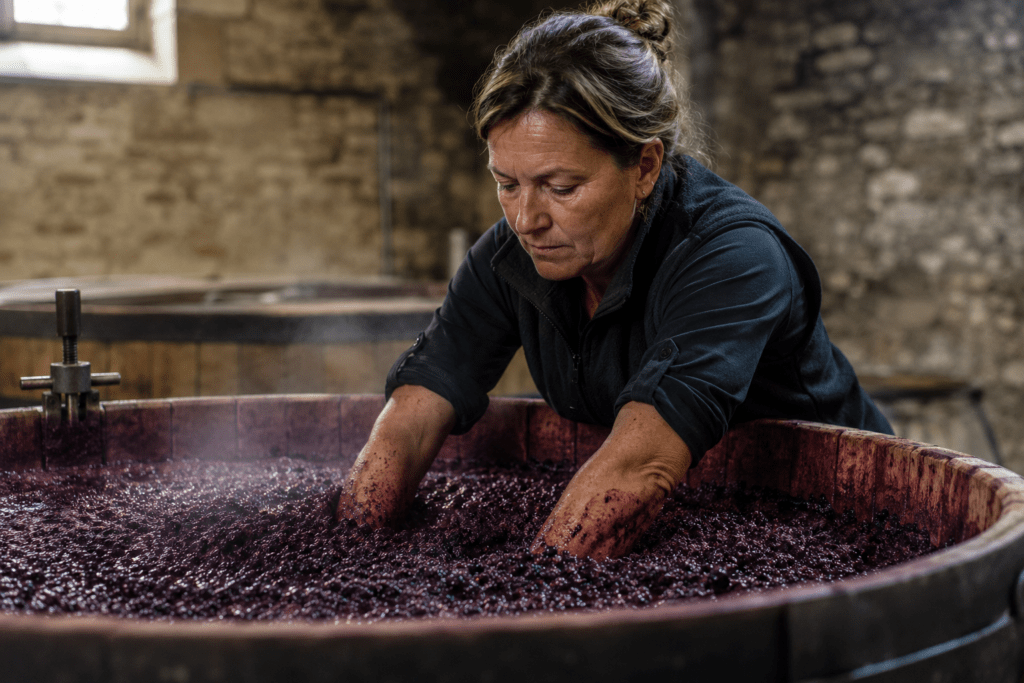
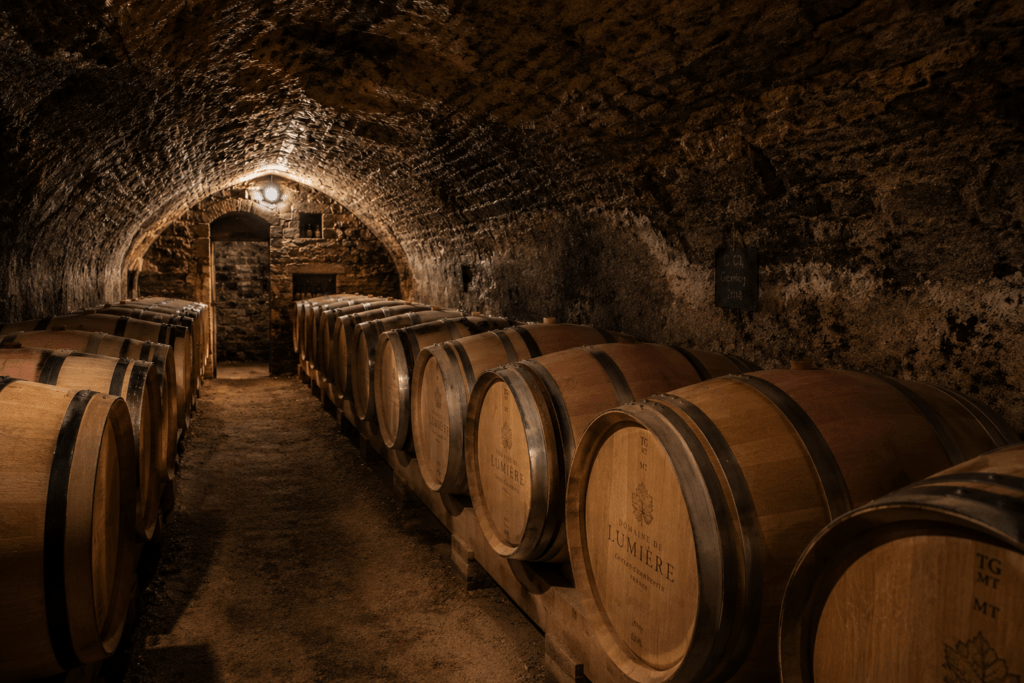
The estate produces eighteen wines across four tiers — village-level appellations, premier cru parcels, a small grand cru holding in Chambertin, and a négociant range sourced from trusted growers across the Côte de Nuits and Côte de Beaune — vinified at a restored 19th-century cuverie in Gevrey-Chambertin, aged in a limestone cellar carved beneath the village, and distributed to fine wine merchants, three-Michelin-starred restaurants, private collectors, and auction houses across France, the UK, the USA, Hong Kong, Singapore, and the UAE, alongside a direct allocation programme for serious collectors and a more accessible négociant range sold through e-commerce.
The brief: build a wine brand credible enough to be poured at a three-Michelin-starred table in Tokyo and desirable enough to generate a waiting list for allocation before the wine is even bottled — then build the digital infrastructure that serves two entirely different audiences simultaneously: the serious collector who has been buying Burgundy for twenty years, and the curious newer wine drinker discovering the region for the first time through the more accessible négociant range.
Before — The Problem
Hélène’s family had been making exceptional wine for three generations without ever needing to market it. The wines sold through a small network of French négociants and a handful of long-standing relationships with Parisian restaurants. That model worked when the volumes were small and the relationships were inherited.
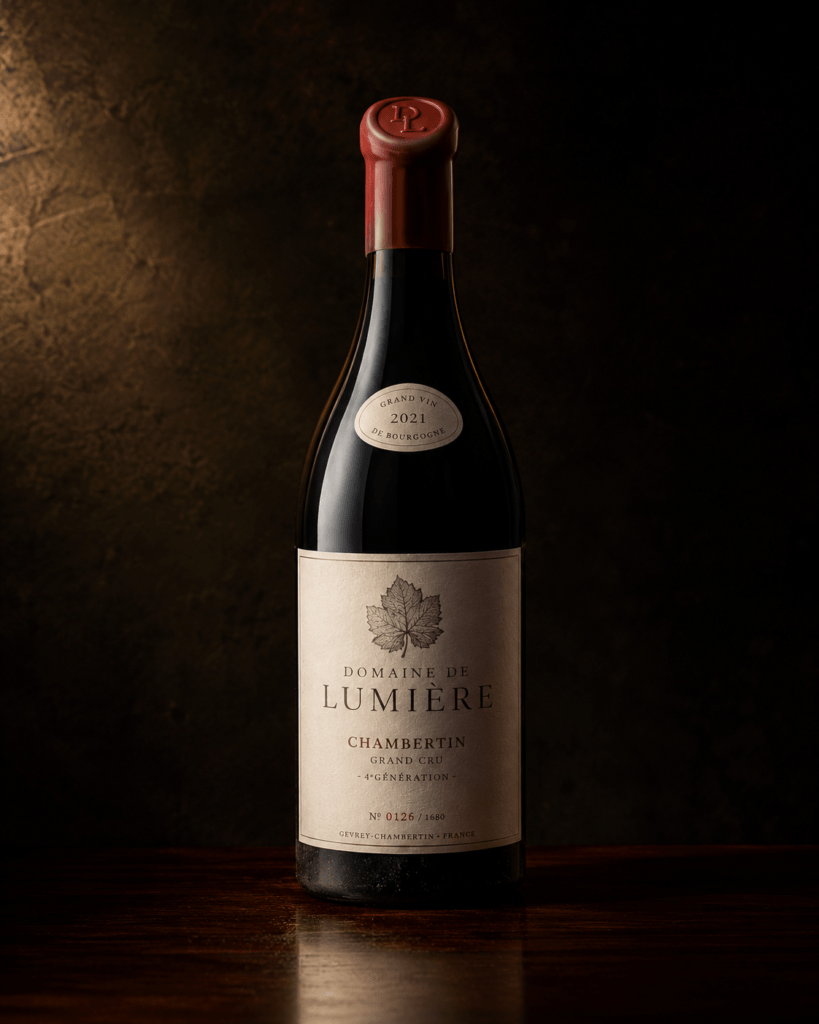
When Hélène inherited two additional premier cru parcels and decided to expand the négociant range to reach a broader international audience, the limitations became immediate. No English-language website. No information for international collectors trying to understand the allocation system. No digital presence for the négociant range that could reach the sommeliers and collectors outside the inherited French network. A label design that had not changed since 1986 and looked, by Thomas’s blunt assessment, like a wine that costs four times less than what’s actually in the bottle.
Three new export market enquiries — from Hong Kong, Singapore, and a major US fine wine importer — had gone unanswered for lack of any English-language material to send them.
The wine was extraordinary. The infrastructure to sell it internationally did not exist.
After — The Outcome
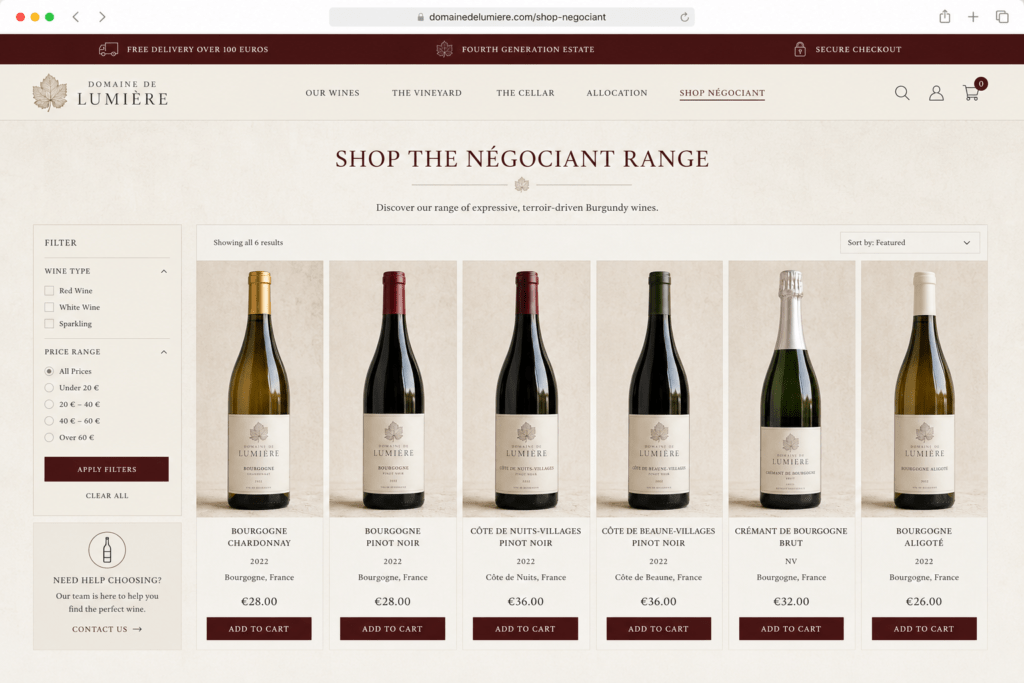
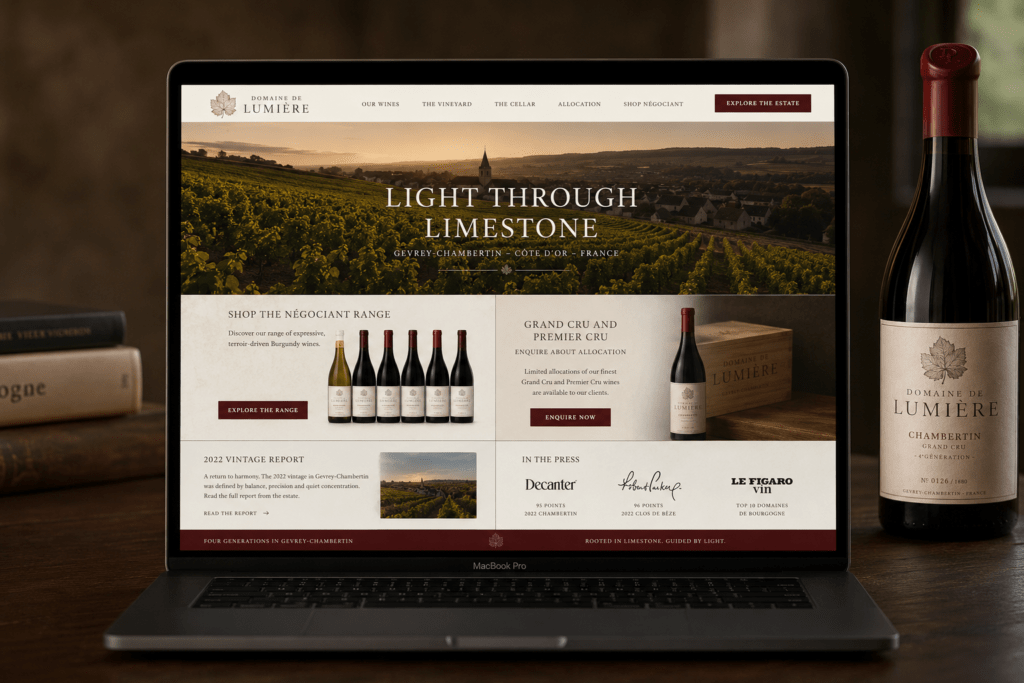
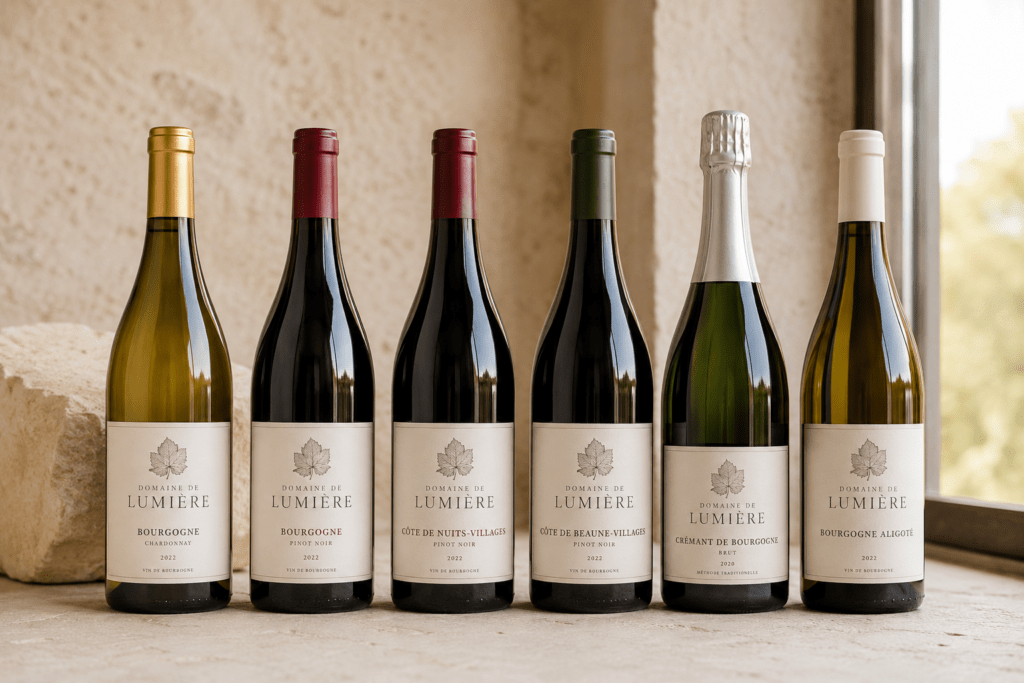
A complete premium wine brand ecosystem — visual identity, label design across all eighteen wines (calibrated by tier), e-commerce platform for the négociant range, an allocation and collector relationship system for the grand cru and premier cru wines, cellar and vineyard brand integration, social media strategy, targeted digital marketing for the accessible range, international SEO, and GEO optimisation positioning the estate as a cited authority on Burgundy terroir.
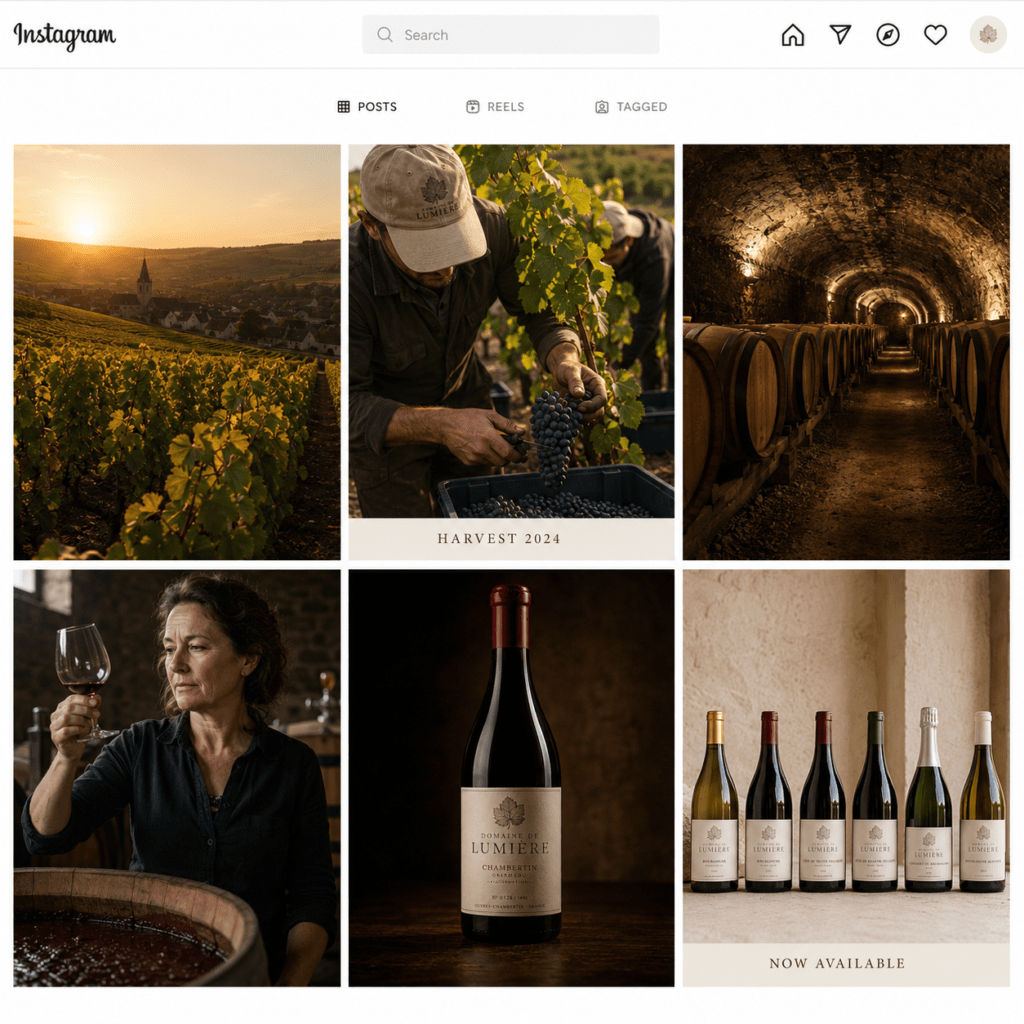
Within fourteen months: the grand cru Chambertin allocation list reached 340 collectors with a two-year waiting list. Export relationships formalised in Hong Kong, Singapore, and the USA. The négociant range reached 1,200 e-commerce customers across nine countries in its first year. Press coverage in The Wine Advocate, Decanter, and Le Figaro Vin. The estate’s Instagram, run with restraint appropriate to the category, reached 34,000 highly engaged followers including sommeliers, collectors, and wine journalists from forty countries.
The wine had not changed. The world’s ability to find it, understand it, and acquire it had been completely rebuilt — calibrated precisely to who was actually buying.
Brand Concept — Light Through Limestone.
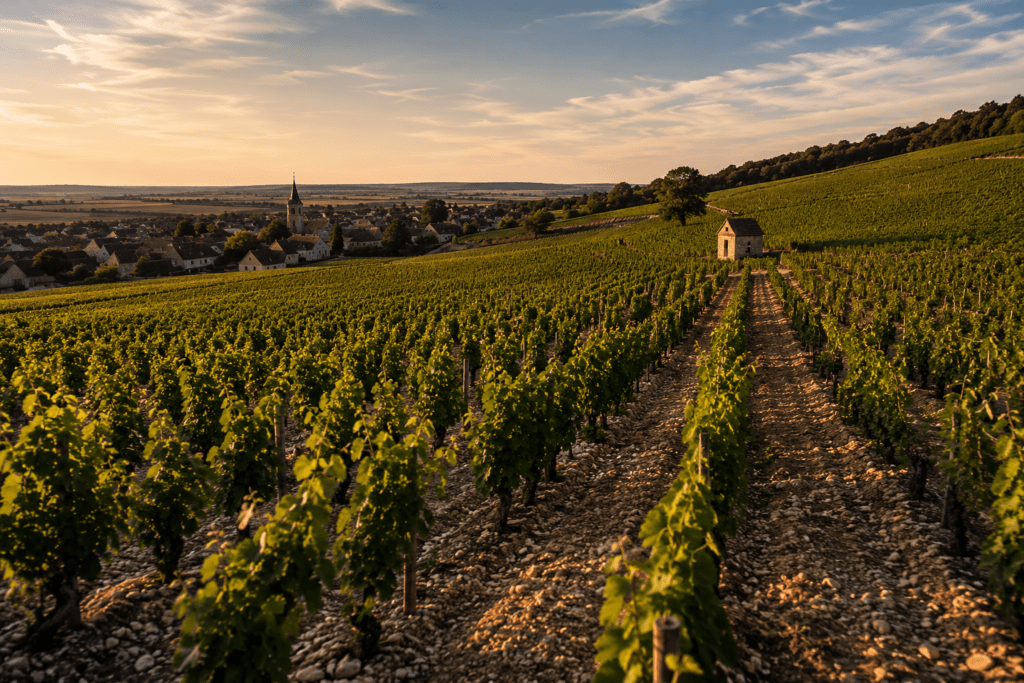
The positioning is built on the defining physical truth of Burgundy terroir — the limestone bedrock beneath the Côte d’Or that gives Pinot Noir and Chardonnay their distinctive minerality, and the particular quality of light on the slope that ripens grapes with a precision no other region has replicated despite centuries of attempts elsewhere.
Light Through Limestone captures both the literal terroir and the brand’s visual sensibility — clarity, precision, and the sense of something luminous filtered through ancient stone. This is not a brand built on noise. Fine Burgundy sells through reputation, scarcity, and the quiet confidence of people who already understand its value — the brand exists to communicate credibility to people who can tell the difference between genuine credibility and marketing.
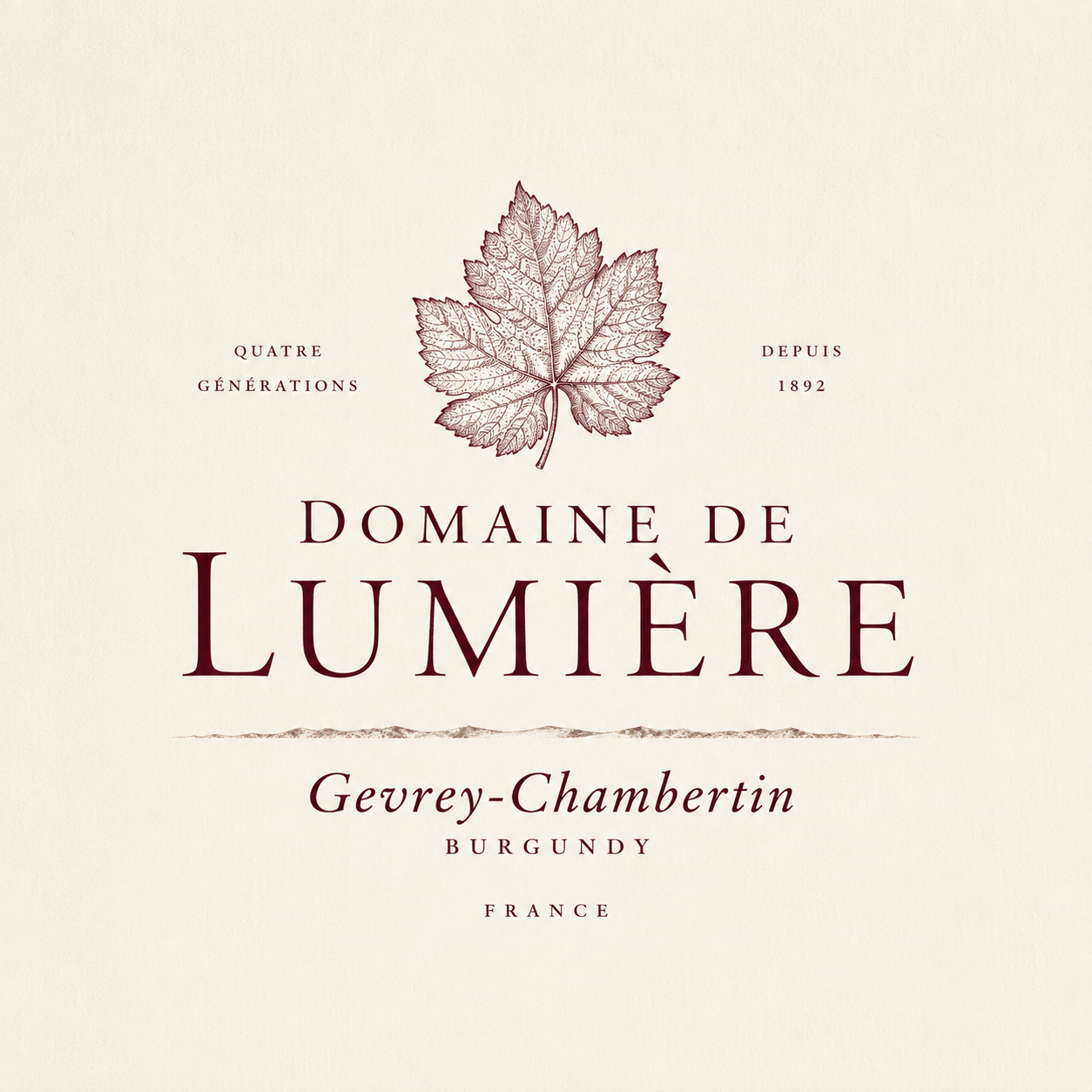
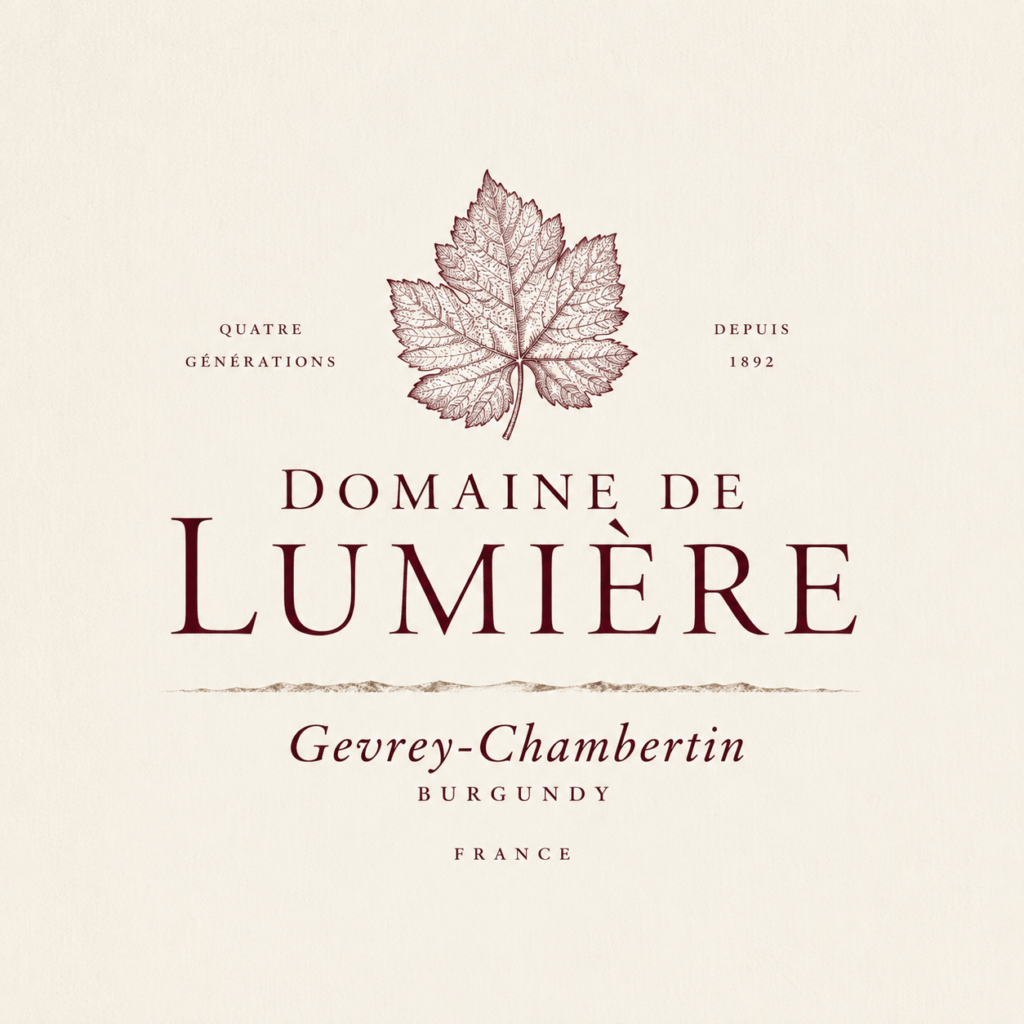
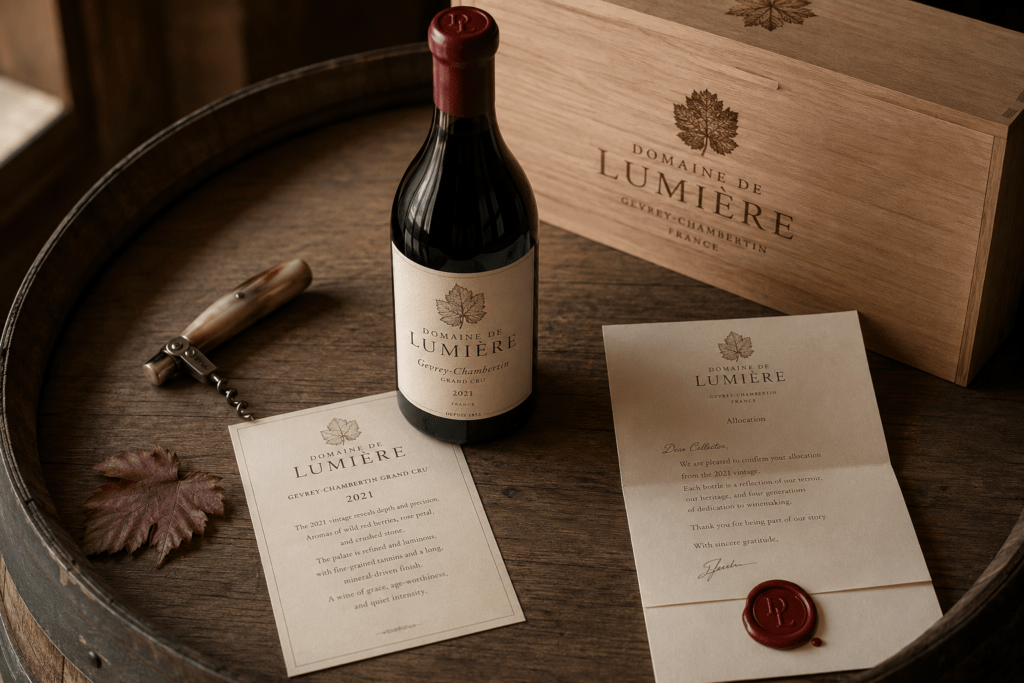
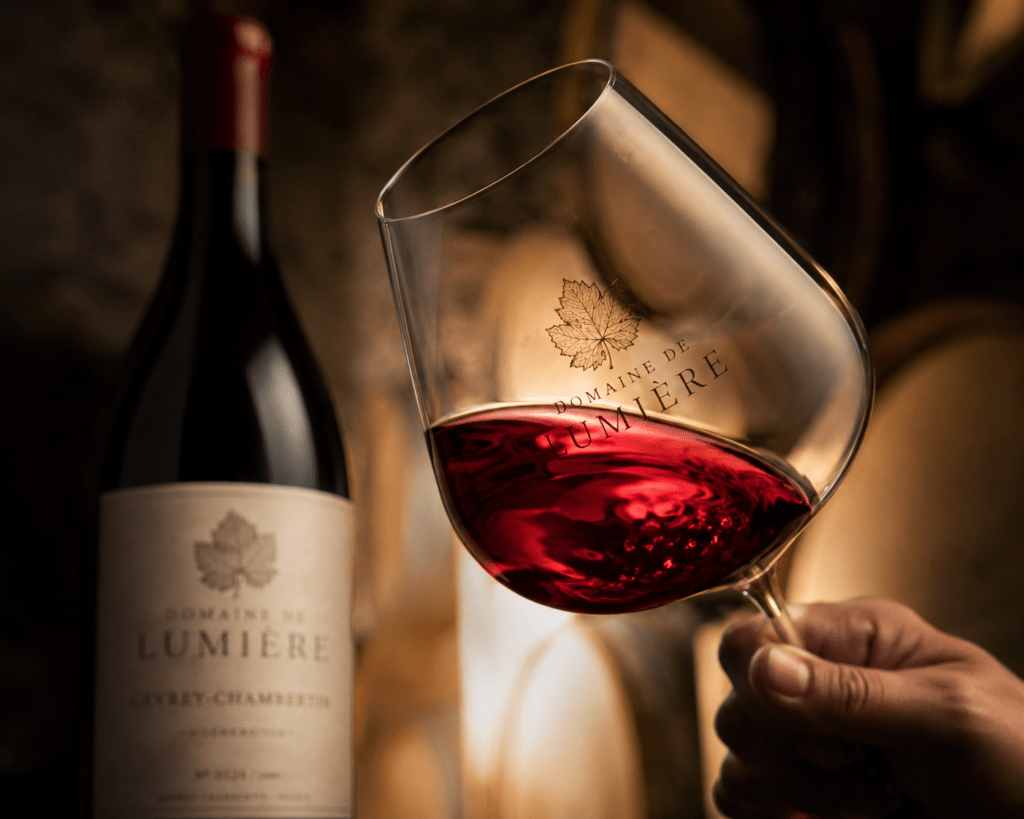
Palette: deep Burgundy red, warm limestone cream, soft moss green, and aged gold. Typography: a classical French serif with engraved character for the estate name and grand cru labels, a cleaner contemporary serif for the négociant range that signals accessibility without sacrificing quality cues. The visual language is restrained throughout — wine at this level does not need to shout, and the brands that try to compensate for thin credibility with loud design are immediately recognisable to the audience that matters.
Two Audiences, One Estate: The Dual-Track Strategy
The central strategic challenge for Domaine de Lumière was never lead generation in the conventional sense — it was building two entirely separate trust relationships from one estate, without either audience feeling like an afterthought to the other.
Track One — The Allocation Collector:
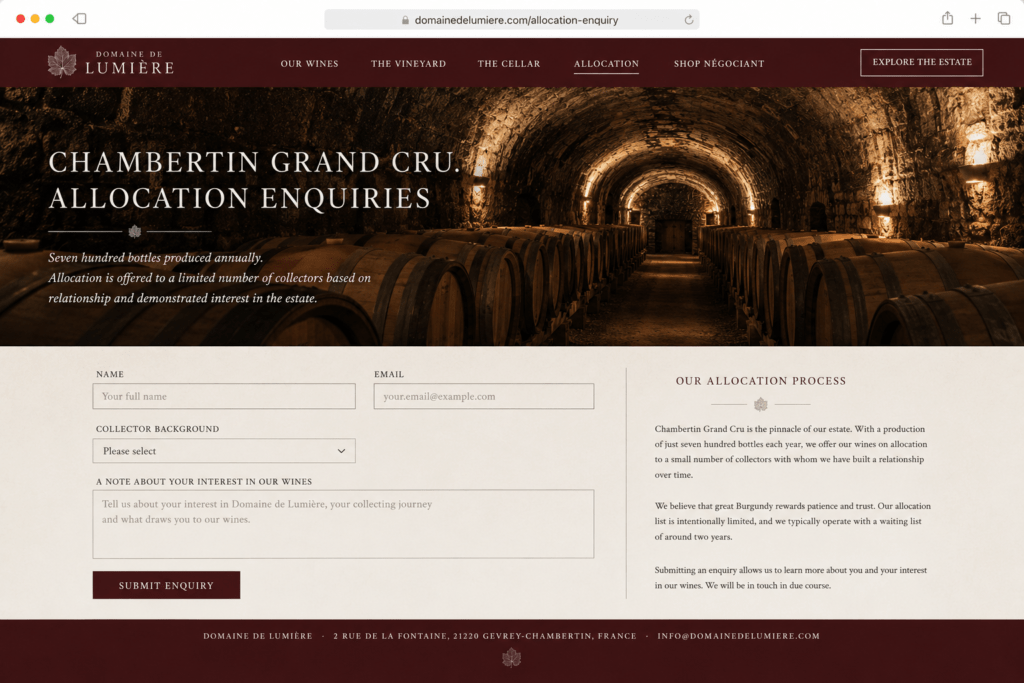
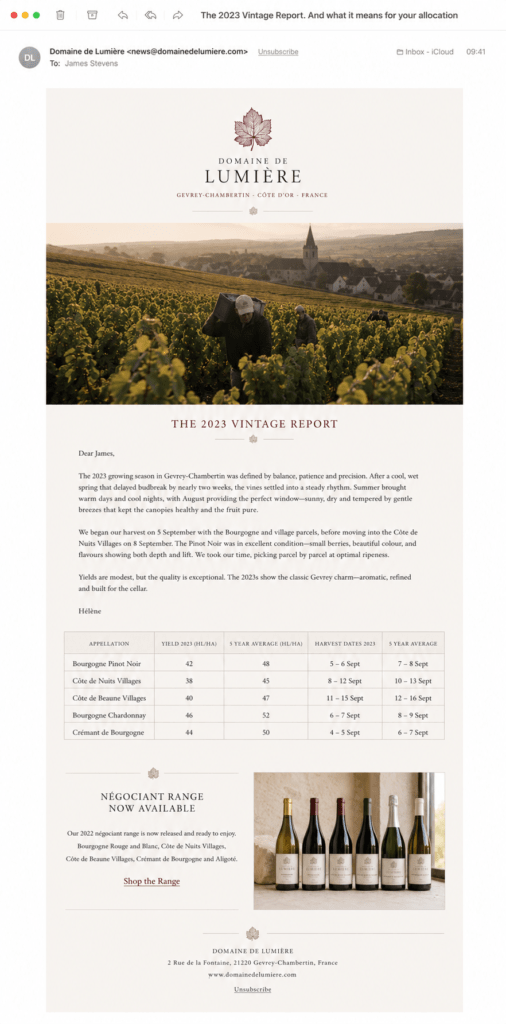
For the grand cru and premier cru wines, the goal is not conversion volume. It’s relationship depth. The website does not sell these wines through a shopping cart — it explains the estate, the vintage, the philosophy, and invites a genuine enquiry. The email programme for this audience is editorial, not promotional — vintage reports, harvest updates, and occasional invitations to cellar visits. Digital advertising plays almost no role here; this audience is reached through wine trade press, sommelier relationships, and word of mouth amplified by genuine content the brand publishes.
Track Two — The Négociant Range Customer:
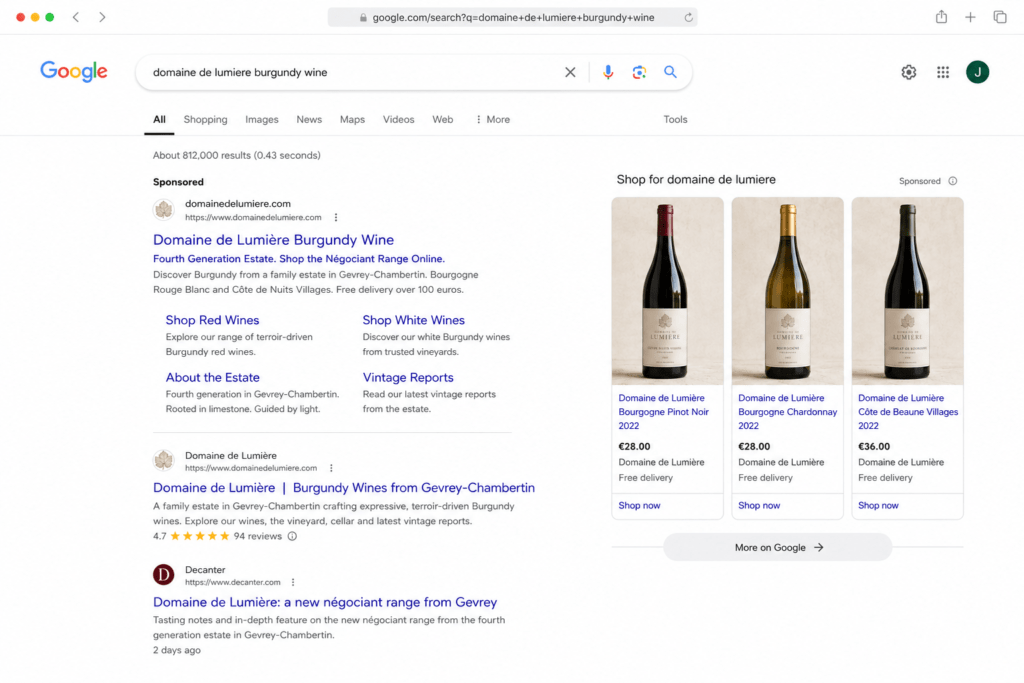
For the more accessible range, the goal is conventional e-commerce performance — traffic, conversion rate, average order value, and repeat purchase. This audience is reached through Google Ads, Instagram, wine education content, and a more conventional digital marketing programme. The website experience for this audience is simplified, the prices are visible, and the path to purchase is short.
The brand architecture allows both to coexist without contaminating either — the négociant range borrows credibility from the estate’s reputation, while the grand cru programme is protected from ever feeling like it’s being “sold” in a way that would undermine its status with serious collectors.
Digital Marketing Strategy
For the Négociant Range (Performance Marketing):
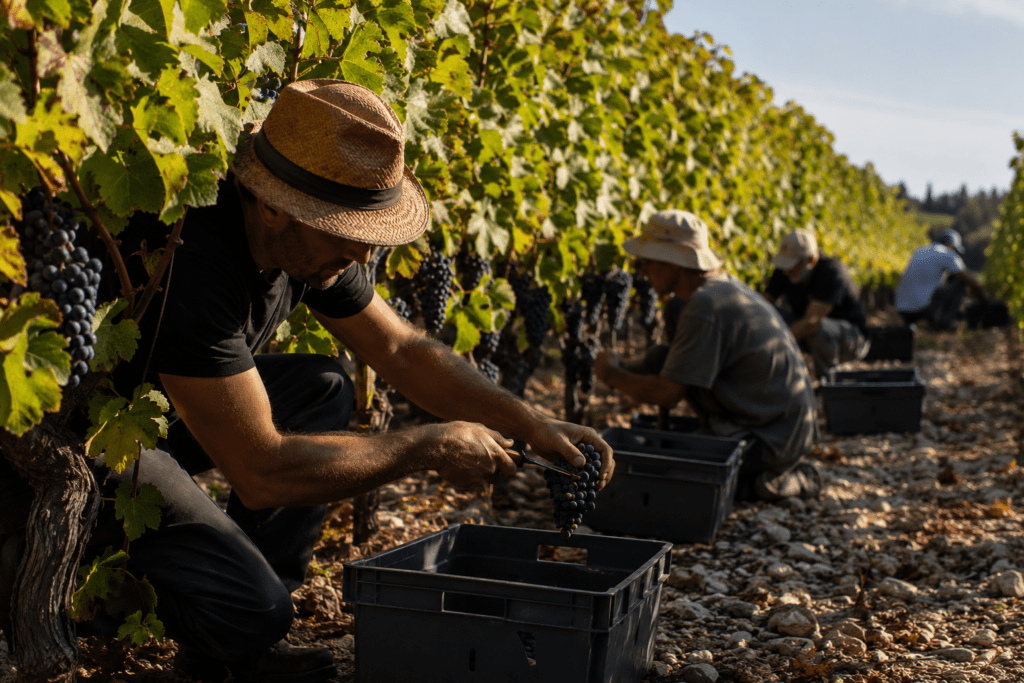
Google Search Ads targeting wine discovery searches across the UK, USA, and key European markets. Campaign structures around appellation education (“what is Bourgogne Rouge”), gifting occasions, and direct product search. Meta and Instagram Ads using vineyard and cellar photography rather than product shots — testing showed lifestyle and provenance content outperformed product photography by 280% for this category. Monthly budget €3,200 producing 180 e-commerce orders.
For the Allocation Programme (Relationship Marketing):
No paid advertising. Growth driven by: wine trade press relationships (The Wine Advocate, Decanter, Jancis Robinson’s team), sommelier outreach at target restaurants, a referral mechanism where existing allocation holders can nominate one new collector annually, and content — vintage reports and vineyard documentation — substantial enough to be cited by wine journalists and AI search tools researching Burgundy without ever reading as self-promotional.
Content Marketing:
A quarterly vintage report written in Hélène’s voice, detailed enough to be referenced by wine journalists and serious collectors. A growing library of vineyard parcel documentation — soil composition, exposition, vine age — that serves both SEO and genuine educational value for the wine trade. This content consistently gets cited and linked by wine publications, building the kind of authority that no advertising budget can purchase in this category.
Email Marketing:
Two entirely separate lists with two entirely separate tones. The allocation list receives quarterly vintage reports and occasional cellar visit invitations — never a discount, never urgency language. The négociant list receives a more conventional but still restrained programme: new release announcements, food pairing suggestions, and seasonal recommendations.
Results Summary
| Metric | Before | After (14 Months) |
|---|---|---|
| Grand cru allocation list | Inherited French relationships only | 340 collectors, 2-year waiting list |
| Export markets formalised | 0 | Hong Kong, Singapore, USA |
| Négociant e-commerce customers | 0 | 1,200 across 9 countries |
| Press coverage | Occasional French trade mentions | The Wine Advocate, Decanter, Le Figaro Vin |
| Instagram followers | 0 | 34,000 highly engaged |
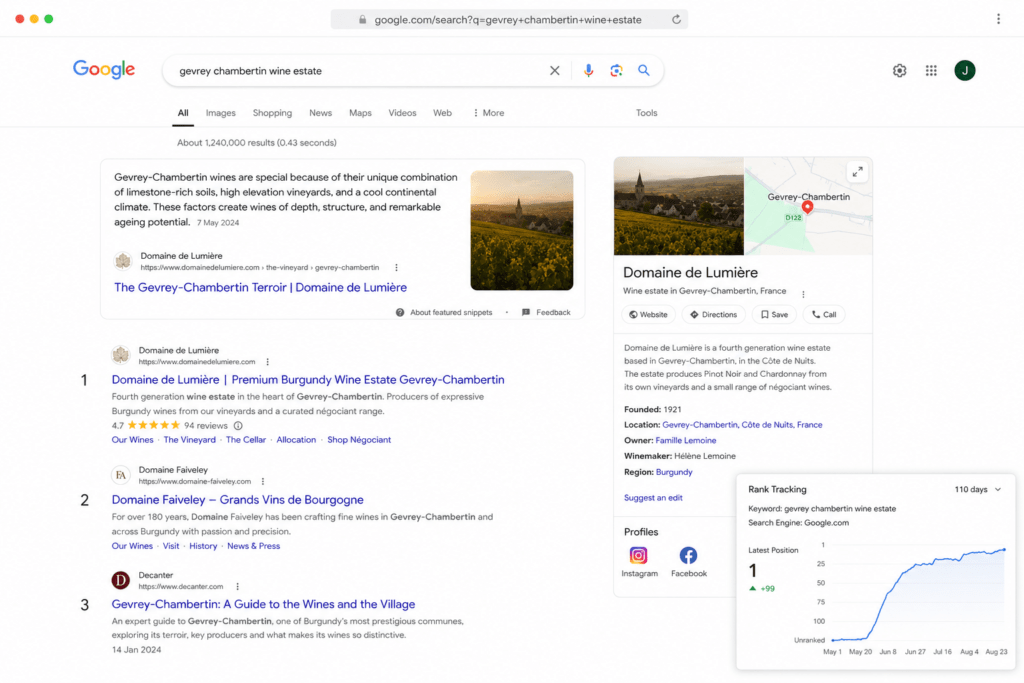
| Google ranking “Gevrey-Chambertin wine estate” | Not ranked | Position 1 |
| Négociant range average order value | N/A | €94 |
| Allocation programme retention | N/A | 96% year-over-year |
Hélène’s family had never needed to market their wine because for three generations, the people who needed to know about it already did. Thomas’s contribution was not persuading more people that the wine was good — it was building two precisely calibrated paths so that the collector who has been buying Burgundy for twenty years and the curious newcomer trying their first bottle could both arrive at the truth about this estate, without either experience feeling like the wrong one. The wine never needed defending. It needed two doors, each opening onto the right room.
Our Digital Marketing Services for Wine, Spirits, and Luxury Beverage Brands Globally
Everything built for Domaine de Lumière is available to any wine estate, spirits brand, or luxury beverage business operating in Europe, the USA, Asia, the UAE, or globally — calibrated to the specific dynamics of categories where reputation, scarcity, and credibility matter more than conventional conversion metrics.
Brand and Identity:
Logo and complete brand system. Label design calibrated by tier — restrained and classical for allocation wines, accessible and contemporary for entry ranges. Estate and cellar brand integration. Photography direction balancing documentary authenticity with commercial polish.
Website and Digital Infrastructure:
Dual-track website architecture serving collectors and conventional buyers from one brand. E-commerce for accessible ranges. Allocation and relationship management systems for scarce, high-value products. International multi-currency commerce.
Search and Content Marketing:
International SEO calibrated for both performance categories and reputation-building content. GEO optimisation positioning estates as cited authorities on their own terroir and category. Content strategy that builds genuine trade and journalist citation rather than purely promotional output.
Performance Marketing (Where Appropriate):
Google and Meta advertising for accessible product ranges. Careful category judgement on where paid media helps and where it would undermine credibility for allocation-based luxury products.
Relationship and Trade Marketing:
Wine and spirits trade press outreach strategy. Sommelier and trade relationship programmes. Editorial content calendars — vintage reports, terroir documentation — built for long-term authority rather than short-term conversion.
What Working With Us Looks Like
✅ Week 1–2: Brand strategy, audience segmentation, category positioning, trade landscape research
✅ Week 3–4: Logo, brand system, label design calibrated by product tier, photography direction
✅ Week 5–6: Dual-track website architecture, e-commerce build, SEO and schema implementation
✅ Week 7–8: Performance marketing launch for accessible ranges, content calendar, trade outreach plan
✅ Month 3+: Monthly reporting, content production, trade relationship development, ongoing optimisation
We bring the judgement to know when conventional performance marketing helps a luxury or heritage brand — and when it would damage the very credibility the brand depends on.
📞 Book Your Free Brand and Marketing Strategy Session
Schedule Your Free 30-Minute Discovery Call →
A direct, honest conversation about your estate or brand, the audiences you actually need to reach, and what a calibrated brand and digital strategy looks like for a category where reputation and restraint often matter more than reach.
We work with a limited number of wine, spirits, and luxury beverage clients per quarter.