Disclosure: This is a concept project created exclusively for portfolio purposes. Brighton Dental is a fictional brand. All expected outcomes are projections, not actual results.
01 — Brand Background
A Practice Built on Patience, Not Pressure
Brighton Dental was founded in 2009 by Dr. Nadia Whitmore, a restorative dentist who trained at King’s College London before opening her first clinic in the Clifton neighbourhood of Bristol. Dr. Whitmore’s founding philosophy was simple and quietly radical: a dental practice should feel like a place people want to return to, not a place they avoid.
Over fifteen years, Brighton Dental grew from a single-chair practice to three locations across the South West of England, serving a combined patient list of over 9,000 registered adults. Yet the brand had never truly grown with the practice. The original website, built in 2014, still used stock photography of overly-white smiles and clinical blue backgrounds — visually indistinguishable from the 40,000 other dental websites on the internet.
Dr. Whitmore’s goals entering this project were clear: attract more cosmetic and preventive care patients aged 28–50, reduce no-show rates through improved digital communication, and create a brand that finally reflected the warmth and expertise the practice had spent fifteen years building in person.
02 — Business Challenges
Five Problems Wearing the Disguise of One
What looked like a simple “website refresh” revealed itself quickly as a layered set of compounding issues. The visual, technical, and strategic problems were tightly entangled.
Challenge 01
Outdated Visual Identity
The brand used cold clinical blues, generic stock images of composite smiles, and a logo that looked like clip art from a dental supply catalogue. It communicated nothing of the practice’s earned warmth.
Challenge 02
Poor Mobile Experience
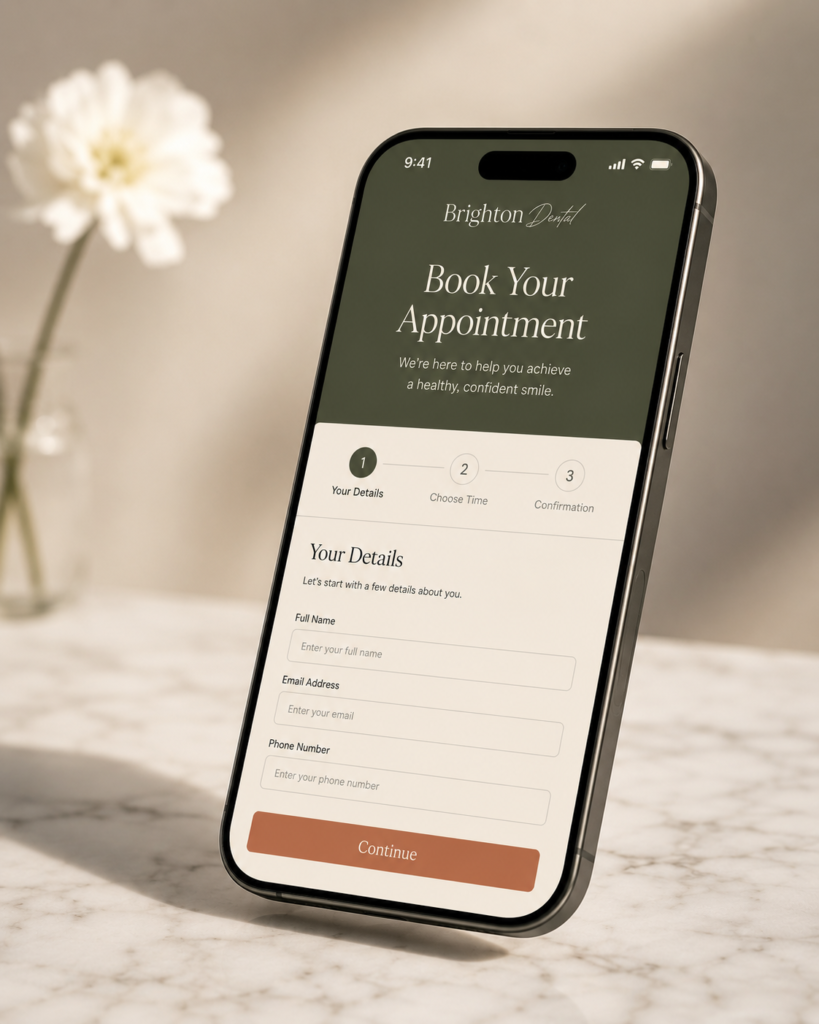
Over 67% of traffic arrived on mobile, but the site was built desktop-first in 2014. CTA buttons were unreachable below the fold. The booking form had 11 required fields and a 40% abandonment rate.
Challenge 03
Weak Local SEO Presence
Despite 15 years of trading, Brighton Dental ranked on page 3 for “dentist Bristol” — behind three practices that opened after 2020. GMB profiles were inconsistent across all three locations.
Challenge 04
No Content Strategy
The website had a blog with 4 posts from 2019, no patient education content, no FAQs, and no service depth pages. There was no strategy connecting content to the patient decision journey.
Challenge 05
Zero Social Proof Architecture
228 Google reviews existed across the three locations but none were surfaced on the website. No before/after treatment photography, no patient stories, no trust signals of any meaningful kind.
Core Insight
The Gap Between Reality & Perception
The practice was genuinely excellent but digitally invisible. Every challenge pointed to the same root problem: a brand identity crisis that prevented the clinic’s true quality from being communicated online.
03 — Discovery & Research
Two Weeks of Listening Before a Single Pixel
Our discovery phase ran across 14 days and included competitive audits of 12 regional dental practices, qualitative interviews with 8 existing patients, a full SEO technical audit, and a heatmap review of 3 months of session recording data.
Emily S., 34
Primary Persona · Cosmetic Seeker
A marketing manager in Bristol’s Redland neighbourhood. She researches extensively before committing. She trusts photography and real patient reviews far more than clinical language. She is actively comparing 4 practices online and will book with whichever feels most credible and calm.
“I want to feel like this place actually cares about me, not just my teeth.”
Marcus R., 47
Secondary Persona · Anxious Avoider
An accountant who hasn’t visited a dentist in 4 years due to anxiety. He searches late at night, reads every word on the website, and makes his decision based on whether the tone feels “safe and non-judgmental.” Speed and simplicity are critical — he almost didn’t call last time.
“If the website makes me feel stressed, I close it and tell myself I’ll try again next week.”
12
Competitors Audited
8
Patient Interviews
67%
Traffic on Mobile
04 — Strategy
Six Strategic Pillars, One Cohesive Direction
Every strategy strand pointed toward the same positioning: the dental practice that earned your trust long before you sat in the chair.
Branding
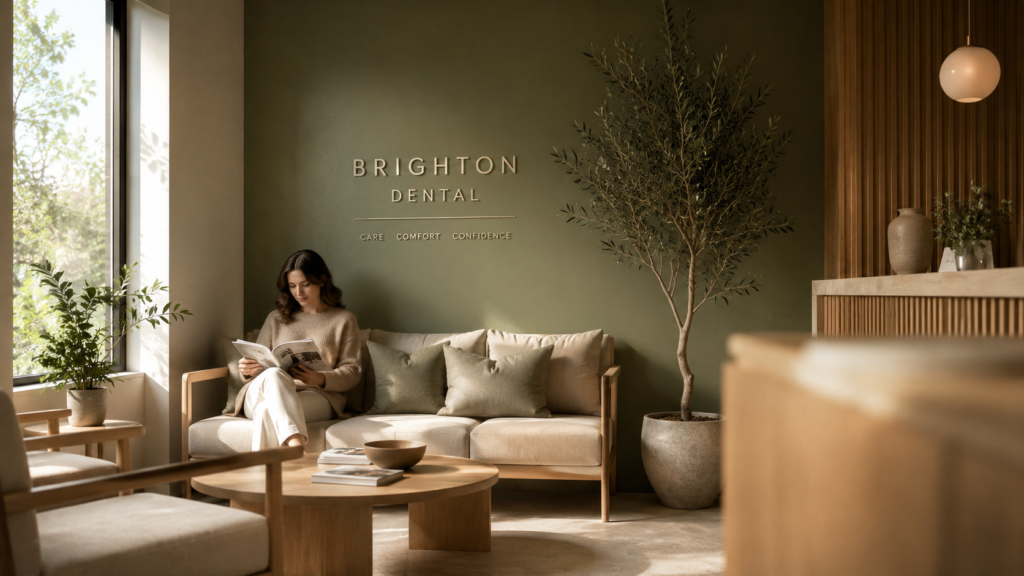
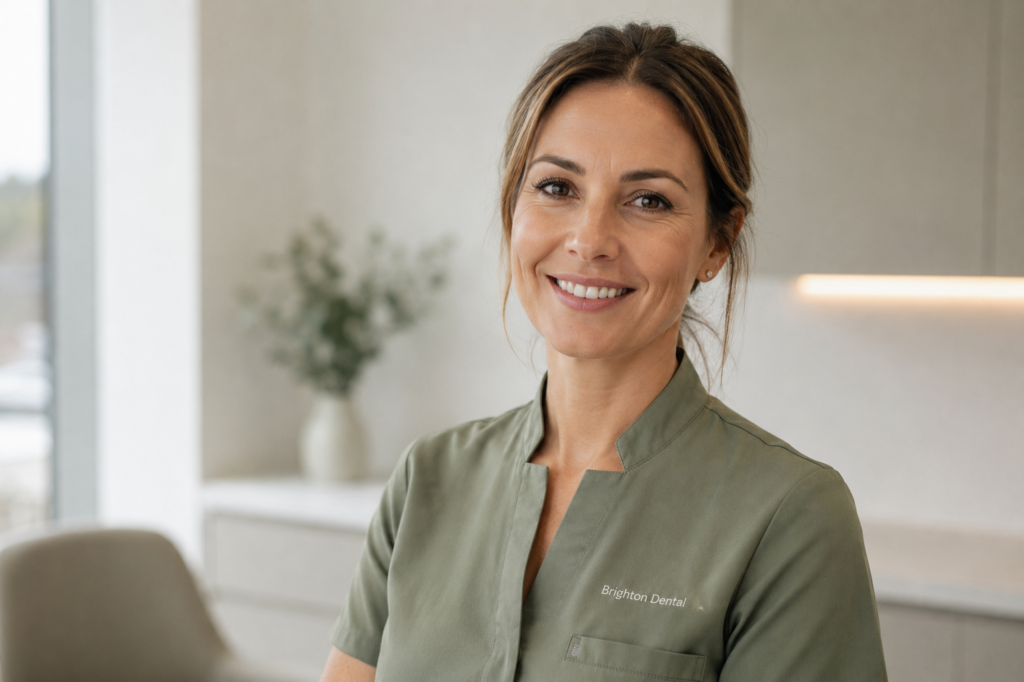
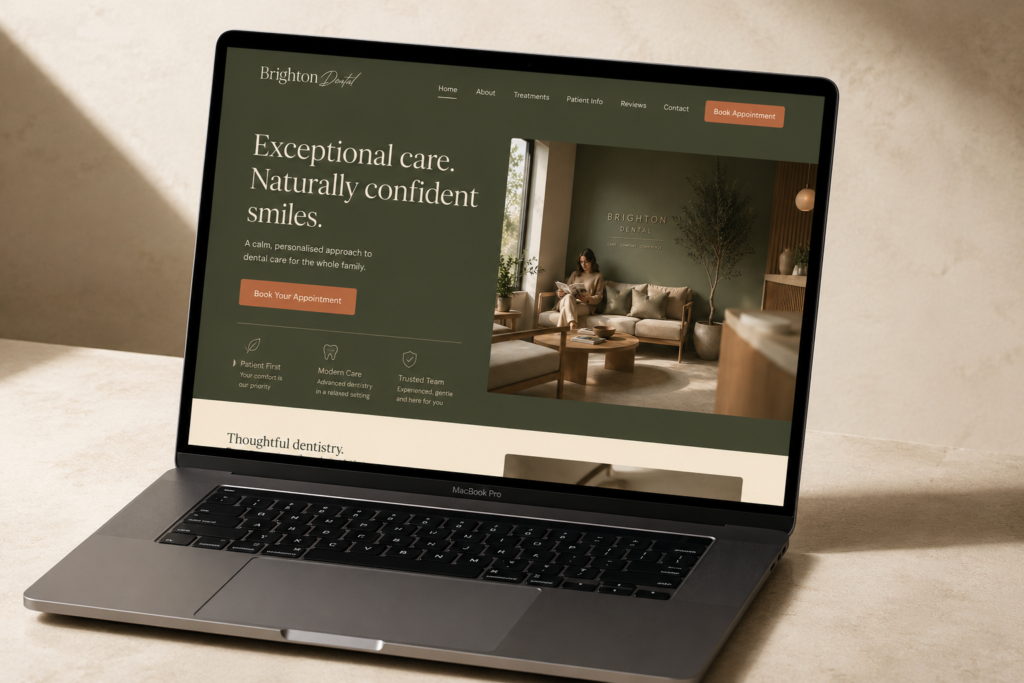
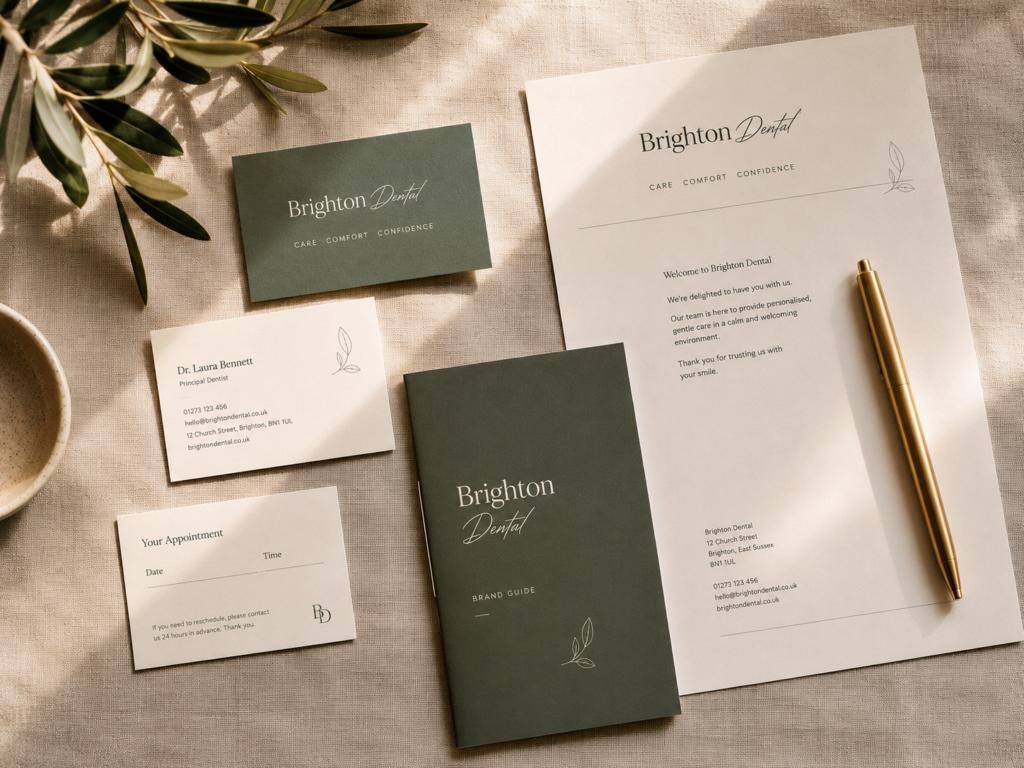
Reposition from generic clinical to warm-premium. Lead with humanity: real photography, editorial typography, sage and cream palette instead of dental-blue.
UX Strategy
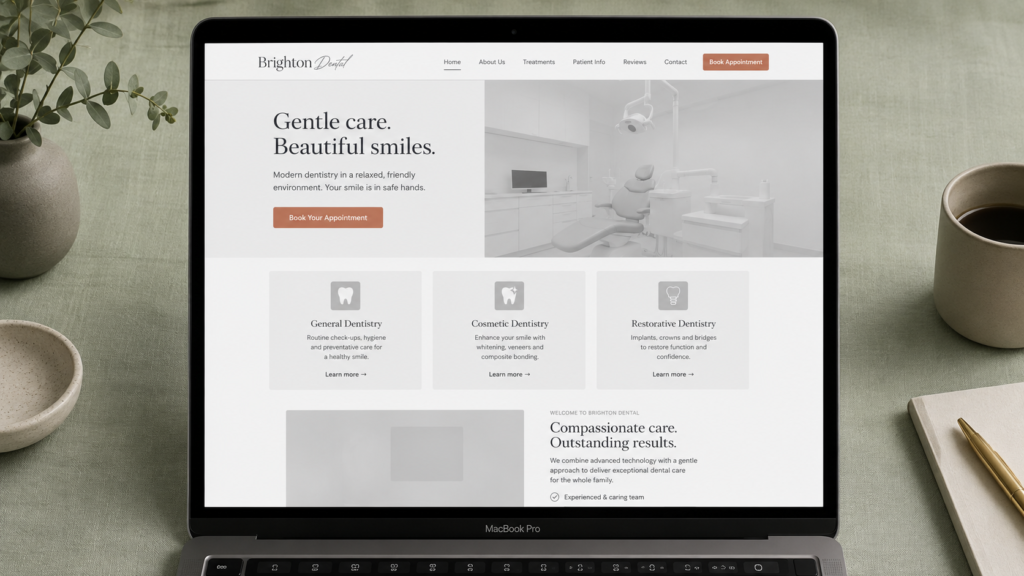
Mobile-first architecture. Reduce booking friction from 11 fields to 3. Place the booking CTA in the nav, hero, and after every service section.
SEO Strategy
Claim category authority for “dentist Bristol”, “teeth whitening Bristol”, and “Invisalign Bristol”. Technical audit, schema markup, and 24 new optimised service pages.
GEO Strategy
Standardise NAP data across all three GMB profiles. Build neighbourhood landing pages for Clifton, Redland, and Cotham. Target 5km radius with hyper-local service copy.
Social Media
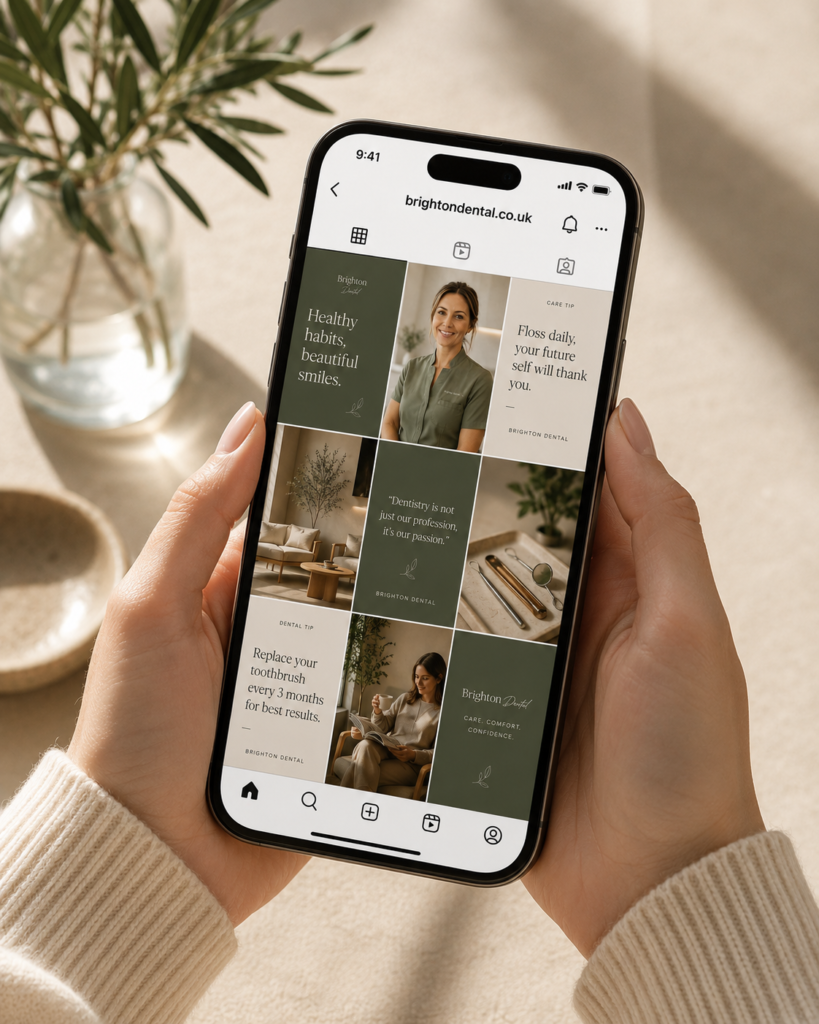
Instagram as the brand’s visual portfolio. A content system of 3 repeating archetypes: clinical education, patient lifestyle (with consent), and behind-the-scenes team content.
Lead Generation
Introduce a “Free Cosmetic Consultation” landing page with a 3-field form. Add a live chat widget for anxious patients who won’t call. Build an email re-engagement sequence for lapsed patients.
05 — Creative Direction
Warm Authority. The Anti-Clinical Aesthetic.
The creative brief was built around a single tension: dental brands must communicate clinical excellence, but every clinic on the market uses the same visual vocabulary to do it. We chose to break entirely with that vocabulary.
06 — Design Process
From Sketch to System in Seven Stages
Stage 01
Mood Boards
Curated 3 visual directions from Dribbble, Behance, Awwwards, and brand archives. Direction C -“Quiet Editorial” – was selected.
Stage 02
Wireframes
Low-fi sketches mapped 8 key templates. Booking flow reduced from 7 screens to 2. Approved in week 3.
Stage 03
Visual Design
High-fidelity Figma frames across 5 templates, mobile and desktop. Went through 3 rounds of client iteration.
Stage 04
Prototype & Test
Clickable prototype tested with 4 users. Navigation labelling revised. Booking CTA moved above fold on mobile.
Stage 05
Development
Built on Webflow with custom interactions. Lighthouse score: 96 performance, 100 accessibility on launch.
07 — Deliverables
Everything Built. Nothing Left to Assumption.
The project produced 18 distinct deliverables across brand, design, development, content, and strategy — each documented and handed over with a full client walkthrough session.
1. Brand Identity System
Logo suite (primary, horizontal, icon mark), colour palette with hex/RGB/CMYK, typography scale, brand voice guidelines, and a 28-page brand standards PDF.
2. Website — 18 Pages
Home, About, Team, 12 treatment service pages, 3 location pages, Blog index, and Contact. Built on Webflow, fully responsive, with CMS for content management.
3. Booking Flow Redesign
3-step appointment booking with SMS confirmation integration, reduced from 11 fields to 3. Connects to the practice management software via API.
4. SEO Technical Audit & Fix
Full crawl audit, canonical corrections, schema markup (LocalBusiness, Dentist, FAQ), page speed optimisation, and a 90-day keyword migration plan.
5. Google Business Profile Overhaul
All 3 locations standardised with consistent NAP, updated photography, service menus populated, Q&A seeded, and a monthly review response template.
6. Photography Art Direction Brief
A 12-page photography direction document with shot list, lighting brief, consent framework, and usage guidance for ongoing social and web content.
7. Content Strategy & 6 Pillar Articles
A 12-month editorial calendar and 6 long-form patient education articles (1,800–2,400 words each), targeting top 20 keyword opportunities identified in discovery.
8. Social Media Template System
48 Canva templates across 3 content archetypes (education, lifestyle, team). Instagram grid strategy and a 60-day launch content calendar.
9. Email Re-engagement Campaign
4-email sequence targeting patients who haven’t booked in 18+ months. Personalised subject lines, warm brand tone, single CTA per email.
10. Analytics & Reporting Setup
GA4 implementation with goal tracking (bookings, phone calls, form completions), Google Search Console, and a monthly Looker Studio dashboard for the client team.
08 — Expected Outcomes
Projected Impact — 6 to 12 Months Post-Launch
All figures below are projected estimates based on industry benchmarks for comparable dental practice web redesigns, SEO campaigns, and UX optimisation projects. They are not actual results.
+55%
Organic Search Traffic
Projected at 6 months post-launch
−38%
Booking Form Abandonment
Based on 3-field vs 11-field benchmark data
Top 5
Local SERP Ranking
“Dentist Bristol” — expected 9–12 months
+30%
New Patient Enquiries
Projected at 12 months vs pre-launch baseline
4.8★
Average GMB Rating Target
Via review request system and GMB optimisation
+22%
Mobile Conversion Rate
Based on mobile-first redesign UX benchmarks
“The practice had 15 years of genuine excellence. Our job was simply to make that visible.”
— Creative Direction Brief, Brighton Dental